Bringing Home a Golden Retriever Puppy: The Week-One Playbook
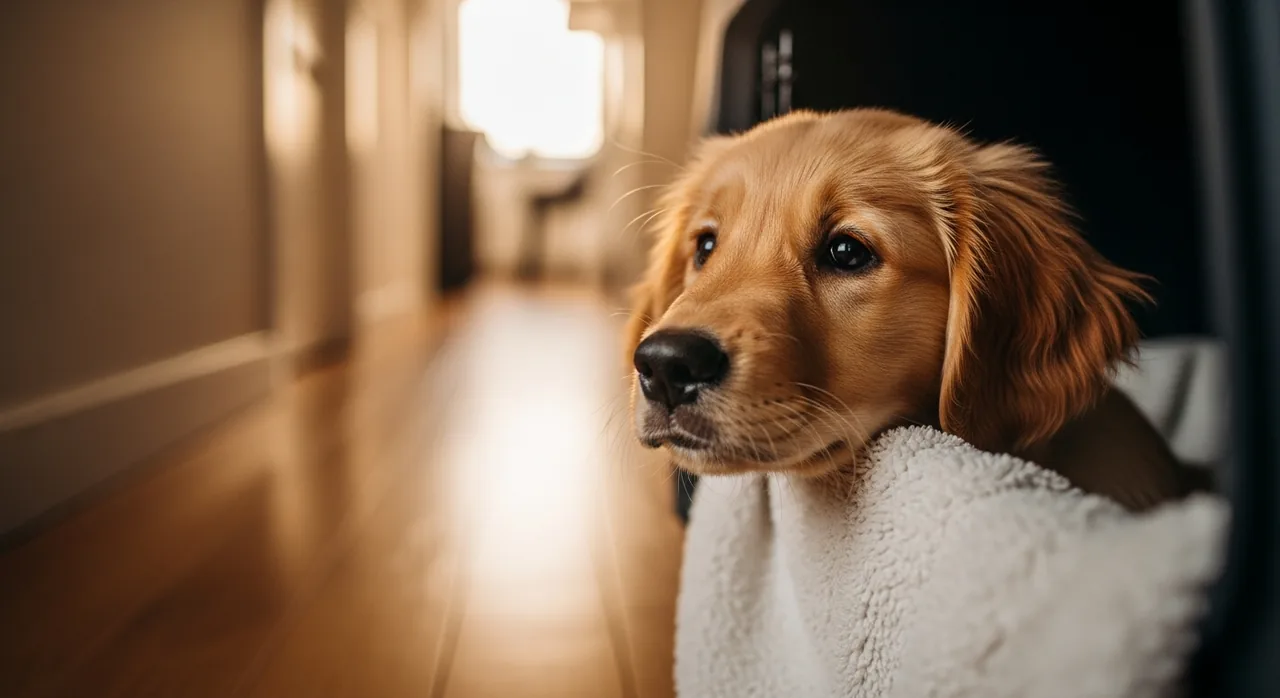
Somewhere around 2 a.m. on night one, standing barefoot in the yard while an eight-week-old golden retriever sniffs the same blade of grass for the fourth minute, every new owner asks the same question: what have I done? Relax. You've done a wonderful thing — you're just in the steepest 168 hours of it. This playbook covers everything from the pre-pickup shopping run to day seven, so the week runs on a plan instead of adrenaline.
The Shopping List Before Pickup Day
Have all of this home and set up before the puppy walks in the door, not the day after:
- Crate: a 42-inch wire crate with a divider panel, sized down to just-fits for now, room to grow later.
- Food: a large-breed puppy formula — ideally the exact food the breeder uses, since week one is no time for a diet change. Portions and meal times are in our puppy feeding schedule.
- Bowls: two stainless steel, non-tip.
- Collar and leash: a flat adjustable collar (they outgrow the first one in weeks) and a 6-foot leash. ID tag ordered in advance.
- Bedding: a washable crate pad and a couple of old towels. Skip the expensive bed until teething ends.
- Chews and toys: a few rubber chew toys, a snuggle toy, a rope toy, and puppy-safe teething chews.
- Cleanup: enzymatic cleaner (a big bottle — trust us), paper towels, poop bags.
- Containment: an exercise pen or baby gates to shrink the puppy's world to one puppy-proofed room.
- Vet appointment: booked for within the first 2–3 days, before you even pick the puppy up.
The Car Ride Home
Bring a second person if you possibly can — one drives, one holds the puppy on a towel-draped lap or steadies a small travel crate. Ask the breeder not to feed a full meal right before departure (motion sickness is common), bring extra towels and wipes, and take a potty break every hour on longer drives — in your arms or in low-traffic grass, not at a dog-heavy rest stop, since vaccinations aren't finished. Keep the ride calm and quiet. This is also the moment to collect the paperwork: health records, vaccination dates, microchip info, and a bag of the current food.
Day One: Less Is More
The biggest day-one mistake is throwing a welcome party. Your puppy just lost its mother, littermates, and every scent it has ever known — what it needs is calm, not a carousel of visitors. Carry the puppy straight to the designated potty spot before going inside, celebrate the (likely) success, then let it explore one puppy-proofed room at its own pace. Feed meals in or beside the open crate, keep handling gentle, and let the puppy nap whenever it crashes — which will be often and sudden. Eight-week-olds sleep 18–20 hours a day. No visitors today; the neighbors can wait until day three or four.
Night One: Crate Survival Guide
Night one is the hardest hour-for-hour stretch of the whole first year, so stack the deck:
- Put the crate in your bedroom, at least for the first weeks. A puppy that can hear you breathe cries a fraction as much as one alone in the kitchen. You can migrate the crate later.
- Tire the puppy gently with calm play before bed, last water pickup about two hours before bedtime, final potty trip immediately before lights out.
- Make the crate warm and scented: a blanket rubbed on the mother (ask the breeder), a snuggle toy, a covered top.
- Expect one or two overnight potty trips. Carry the puppy out silently, no play, no lights, straight back to the crate.
- Distinguish complaint from need. Grumbling that fades is settling; escalating crying after a recent potty trip still gets a boring, businesslike trip out — never a play session, and never punishment.
Most golden puppies settle into the crate within three to five nights. Consistency is the entire trick.
Days 2–7: Building the Routine
From day two, run the same daily skeleton: wake, potty, breakfast, potty, play/training, nap, repeat — with potty trips after every meal, nap, and play session, roughly every 60–90 minutes while awake. Start using the name constantly (if you're still deciding, our 500+ golden retriever names list will settle it), begin two-minute training bursts for "sit" and name response, and practice short absences — thirty seconds, then a few minutes — so being alone is normal from the start. Introduce the leash indoors as a thing that means treats. Keep the world small: one floor, one yard, familiar faces in ones and twos.
The First Vet Visit
Book the first exam within 72 hours of pickup — most breeder contracts require it, and it's simply good practice. Bring the breeder's health and vaccination records, a stool sample, and your list of questions. The vet will do a nose-to-tail exam, check for parasites, confirm the microchip, and map out the remaining vaccine schedule and parasite prevention. The AVMA's guidance for new dog owners is a solid pre-visit read for what a good start to veterinary care looks like. Make the visit fun: treats from you, treats from the staff, and no procedures that can wait.
What NOT to Do in Week One
Five week-one mistakes to skip: Don't host a puppy party — socialization matters enormously, but week one is for bonding and settling, not crowds. Don't punish accidents; rub-their-nose-in-it advice is decades obsolete and just teaches puppies to hide. Don't change foods abruptly. Don't take an unvaccinated puppy to dog parks or pet-store floors. And don't skip the crate "because he cried" — the crate is the foundation of house-training, safe alone-time, and every road trip for the next twelve years.
After the First Week
By day seven you'll have a puppy that knows where dinner happens, roughly where the bathroom is, and that the big crate is a safe place with a warm blanket. That's the whole assignment. The socialization window, training milestones, and vaccine schedule that fill the next eleven months are mapped out in our complete first-year guide — but for now, sit on the floor, let the puppy fall asleep on your foot, and take the picture. They're only this small once.