Golden Retriever Puppy: The Complete First-Year Guide
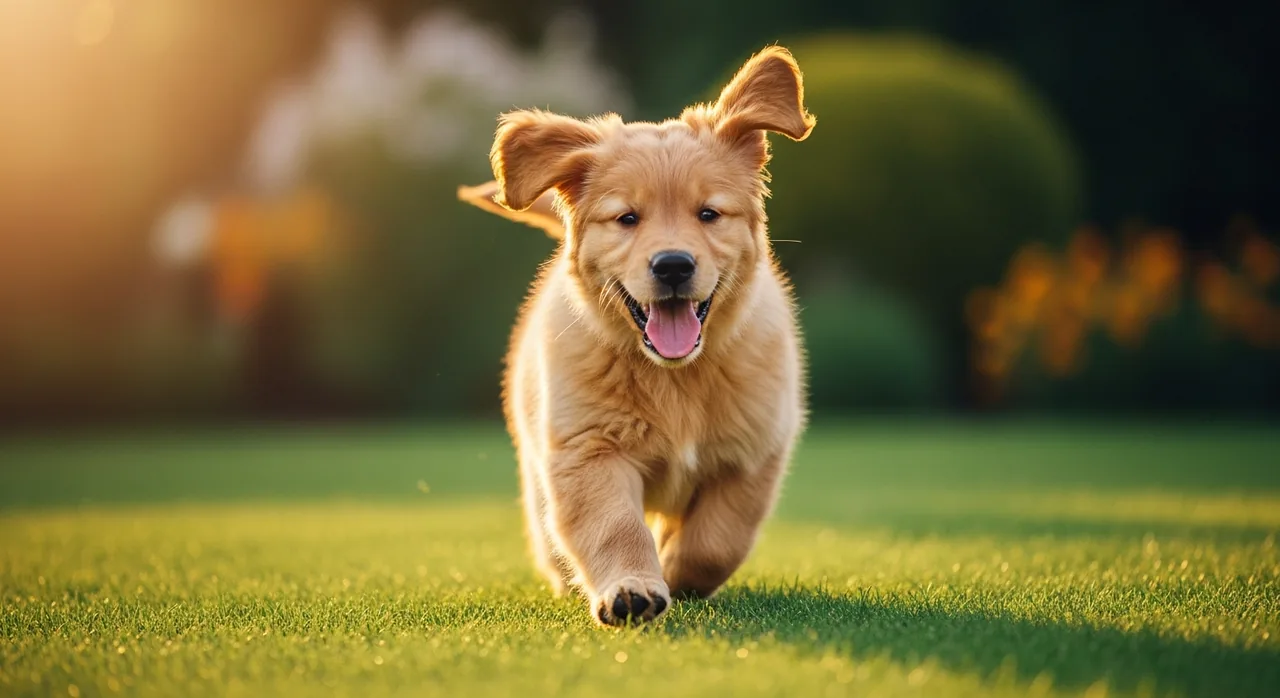
A golden retriever puppy's first year compresses an entire childhood, adolescence, and most of a college education into twelve months. The dog you have at eight weeks — a wobbly, needle-toothed potato — and the dog you have at fifty-two weeks share almost nothing except a name and a growing appetite. Knowing what's coming each month is the difference between riding the wave and being flattened by it.
This guide walks the whole first year, month by month: what your puppy is capable of learning, what their body is doing, which vet visits land when, and the mistakes that cost new owners the most.
Months 2–3: Survival Mode
Most puppies come home at eight weeks, and the first month is legitimately hard. Expect four meals a day, a potty trip every one to two hours (plus after every nap, meal, and play session), and a bladder that gives you roughly ninety seconds of warning. Sleep is broken for the first week or two, then improves fast if the crate routine is consistent.
Your only real jobs this month are house-training, crate comfort, gentle handling, and keeping the puppy safe. Don't worry about obedience beyond a cheerful "sit" for dinner. If you haven't brought your puppy home yet, our week-one playbook covers the shopping list, the car ride, and the first night in painful detail.
Months 3–6: The Socialization Window and Bite Inhibition
This is the stretch that shapes your dog's adult temperament more than any other. Roughly between three and sixteen weeks, puppies form their template of what's normal in the world — people in hats, kids on scooters, vacuum cleaners, other dogs, car rides, the vet's lobby. Experiences during this window stick; gaps in it can become lifelong wariness.
Balance the exposure against vaccine status: carry the puppy in public places, host visitors at home, and enroll in a well-run puppy class that requires proof of first shots. Goldens are famously mouthy retrievers, and this is also peak landshark season. Teach bite inhibition by ending play the instant teeth touch skin — a calm "oops," ten seconds of ignoring, then resume. Redirection to a toy works; yelping and jerking away usually just makes the game more exciting.
Teething runs roughly four to six months. Frozen wet washcloths, rubber chew toys, and supervision of everything wooden in your house will get you through it.
Months 6–12: Adolescence
Somewhere around six to eight months, your reliable little student develops selective hearing, boundless energy, and the impulse control of a caffeinated squirrel. This is normal. Adolescent goldens aren't regressing — they're flooded with hormones and newly confident, and the recall that was perfect at five months suddenly competes with every smell in the county.
The fix is management, not frustration: keep the long line on during recalls, keep training sessions short and rewarding, and dramatically increase mental work (sniff walks, food puzzles, short shaping sessions) alongside physical exercise. Follow the five-minutes-per-month-of-age rule for structured exercise to protect growing joints — a seven-month-old gets about thirty-five minutes of leashed walking at a time, not five-mile runs. To understand what's happening in their growing body during this stretch, see our guide to golden retriever growth stages.
Vaccination and Vet Schedule
Your breeder or rescue will have handled the first round; the rest lands on you. A typical schedule, per the AKC's puppy vaccination guide, looks like this: core vaccines (distemper, adenovirus, parvovirus) at 8, 12, and 16 weeks; rabies between 12 and 16 weeks per local law; and optional vaccines like leptospirosis, bordetella, and canine influenza based on your region and lifestyle. Monthly parasite prevention starts right away.
Your vet will also want to discuss spay/neuter timing. For large breeds like goldens, many vets now recommend waiting until 12–18 months to allow growth plates to close — but this is a genuine medical decision with trade-offs in both directions, so make it with your own veterinarian rather than the internet.
Training Milestones by Month
| Age | Reasonable expectation |
|---|---|
| 2–3 months | Name response, sit, crate naps, potty routine forming |
| 3–4 months | Down, come (indoors), loose-leash starts, handling tolerance |
| 4–6 months | Stay with duration, recall on a long line, polite greetings in progress |
| 6–9 months | Proofing everything against distraction; expect regression |
| 9–12 months | Reliable house manners, solid recall re-emerging, off-leash in safe areas |
Feeding changes track alongside training — meal counts drop from four to three to two over the first six months, and portions climb steeply. Our puppy feeding schedule has the full chart by age.
Common First-Year Mistakes
- Under-socializing before 16 weeks. Waiting for "all the shots" and missing the window entirely. Carry the puppy; don't cancel the world.
- Over-exercising the skeleton. No forced running, stair repetitions, or big jumps before growth plates close.
- Punishing the landshark. Mouthing is developmental, not dominance. Redirect and outlast it.
- Quitting training at the adolescent dip. The 8-month-old ignoring you is temporary — if you keep training through it.
- Free-feeding. Scheduled meals power house-training, training rewards, and healthy growth.
The one-sentence version of this whole guide: socialize hard before 16 weeks, protect the joints until 18 months, train through adolescence instead of around it, and let your vet make the medical calls. Do those four things and the rest is mostly cleanup and cuddles.
What Twelve Months Buys You
At one year, a golden is physically most of the way to adult size but mentally still a teenager — full maturity arrives closer to two. What you'll have, though, is the foundation: a dog who trusts people, settles in a crate, comes when called, and thinks working with you is the best game available. Every one of the next eleven years pays interest on this one.