Golden Retriever Grooming: The Complete At-Home Routine
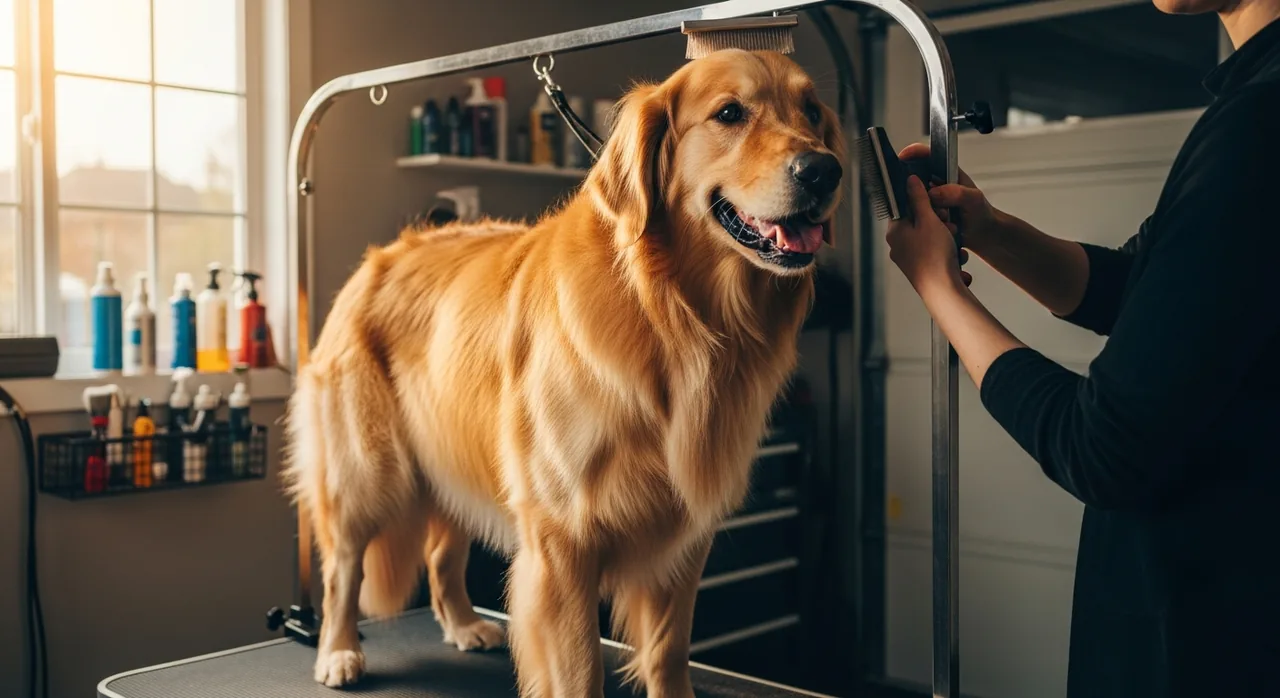
A golden retriever is not a wash-and-wear dog, but it's also not a poodle. Somewhere between "never touch a brush" and "$90 salon visits every month" is a simple at-home routine that keeps the coat healthy, the house survivable, and the vet bills down — because half of what a groomer catches early (ear infections, hot spots, overgrown nails) you can catch yourself with your hands in the coat every week.
Here's the full system: what to do weekly, what to do monthly, the small amount of trimming that's actually appropriate, and the jobs worth paying a professional for.
The Weekly Brushing Routine
Fifteen to twenty minutes, once or twice a week, does more for a golden's coat than any product you can buy. Goldens carry a double coat — a soft, dense undercoat beneath a water-resistant outer coat — and the undercoat is where mats form and dead hair accumulates. Work in this order:
- Undercoat rake first, with the grain, over the whole body. This lifts out loose undercoat before it ends up on your sofa.
- Slicker brush second, concentrating on the friction zones: behind the ears, armpits, the britches (rear thigh feathering), and the tail.
- Metal comb last as an audit. If the comb glides to the skin everywhere, you're done. If it snags, you've found a mat forming — tease it apart now while it's small.
During spring and fall coat-blow, bump this to a short daily session. If the volume of hair still surprises you, that's normal for the breed — see our full guide to golden retriever shedding for what's typical season by season and what signals a problem.
Bathing: How Often Is Too Often?
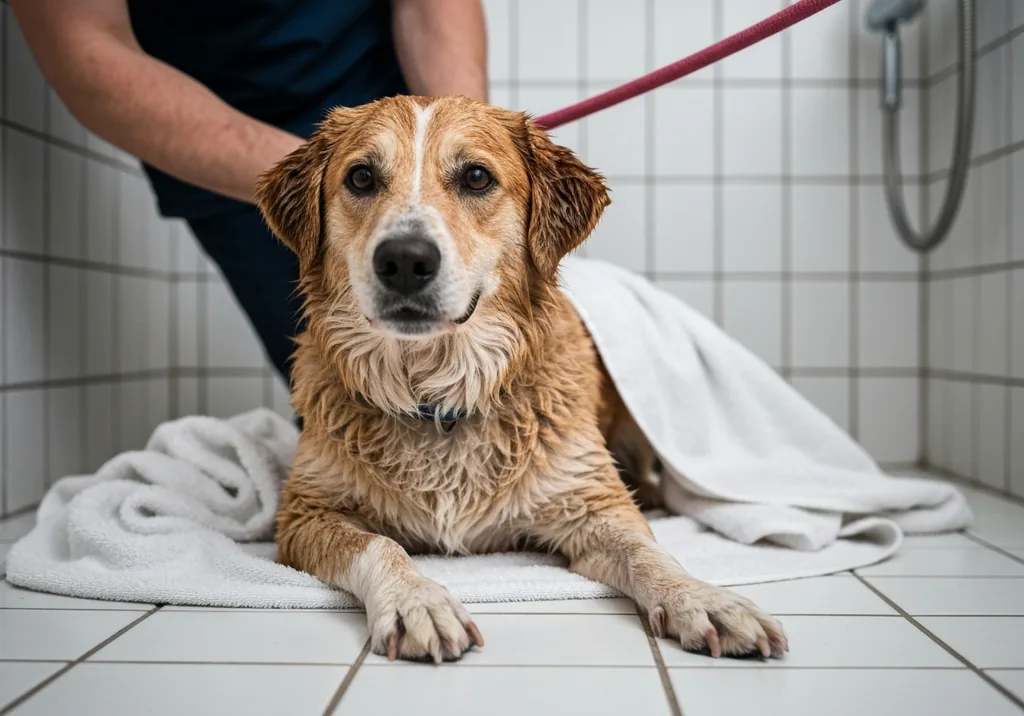
Every six to eight weeks is plenty for most goldens, with an extra bath after a swamp adventure or a roll in something unspeakable. Bathing more often than every few weeks strips the natural oils that make the outer coat water-resistant, and dry skin on a golden quickly turns into scratching, dander, and hot spots.
Two rules matter more than shampoo brand: use a dog-formulated shampoo (human products are the wrong pH), and rinse about twice as long as feels necessary. Leftover shampoo residue trapped in the undercoat is one of the most common causes of itchy skin in double-coated dogs. Dry thoroughly afterward — a damp undercoat against the skin is a hot-spot incubator, especially in summer.
Trimming Feathers, Feet & Ears — Never the Body
Goldens need far less scissor work than people assume, and the trimming that is appropriate is tidying, not shaping:
- Feet: trim the hair between the paw pads flush with the pads, and neaten the "slippers" around the outside of the foot. This improves traction on hard floors and tracks less mud.
- Ears: a light trim of the fringe around the ear edges keeps the leather ventilated and tidy.
- Feathering: the long hair on the tail, legs, and chest can be lightly tipped with thinning shears if it's dragging or collecting debris.
What you should never do is shave or clip the body coat. The double coat insulates against heat as well as cold, and a shaved golden loses that protection — plus the coat often regrows patchy and woolly. The AKC's golden retriever grooming guide is emphatic on the same point: the breed is meant to be brushed out, not cut down.
Nails, Ears & Teeth: The Cadence That Prevents Vet Visits
These three small jobs are where home grooming pays for itself:
- Nails — every 2 to 3 weeks. If you hear clicking on hard floors, they're overdue. Long nails change how a dog stands and load the toe joints. Clip small amounts frequently rather than big cuts rarely, or use a grinder if your dog tolerates it better.
- Ears — check weekly, clean as needed. Goldens' floppy ears and love of water make them ear-infection specialists. A quick sniff-and-look after swimming, and a wipe with a vet-approved ear cleaner when you see wax, prevents most infections. Redness, odor, or head-shaking means a vet visit, not more cleaning.
- Teeth — brush 2 to 3 times a week with dog toothpaste. Dental disease is nearly universal in middle-aged dogs and entirely cheaper to prevent than to treat under anesthesia.
The weekly once-over is a health screen. While you brush, run your hands over the whole dog: lumps, ticks, hot spots, sore ears, weight change. Owners who groom weekly catch problems months before annual-checkup owners do. Anything unusual — a new lump, persistent ear trouble, skin that stays red — goes to your veterinarian, not to the internet.
Tools Worth Buying Once
You need about five tools, and good ones last a decade: an undercoat rake, a slicker brush, a stainless greyhound comb, nail clippers or a grinder, and thinning shears for feet and tidying. A high-velocity dryer is the one luxury item worth considering — it blasts loose undercoat out after baths and cuts drying time from hours to minutes. Skip the gimmicks; coat quality itself comes mostly from genetics and diet, which is why what's in the bowl matters as much as what's in the grooming kit — see our guide to choosing food for a golden retriever.
Professional Grooming: When & What It Costs
Plan on a professional groom two to four times a year, typically $75–$120 for a full bath, blow-out, and tidy on a golden-sized dog. A pro with a high-velocity dryer will remove more undercoat in one session than you'll rake out in a month, which makes a pre-summer and end-of-coat-blow appointment especially worthwhile. Pros are also the right call for a badly matted coat (never cut mats out yourself near the skin) and for nail trims if your dog fights you.
One instruction to give every groomer, every time: brush out, trim feet and tidy feathering — no shaving, no shortening the body coat.
Start Young, Keep It Short
The dogs who stand politely for grooming at age six are the puppies who were handled — paws, ears, tail, teeth — for thirty seconds at a time from eight weeks old. If you're starting with a puppy, fold grooming touches into daily life from day one; our first-year puppy guide covers where it fits in the bigger training picture. Keep sessions short, end on treats, and quit before the dog does. A golden that enjoys the brush is a fifteen-minute weekly chore; one that dreads it is a wrestling match for twelve years.