How to Choose a Golden Retriever Breeder (With Red-Flag Checklist)
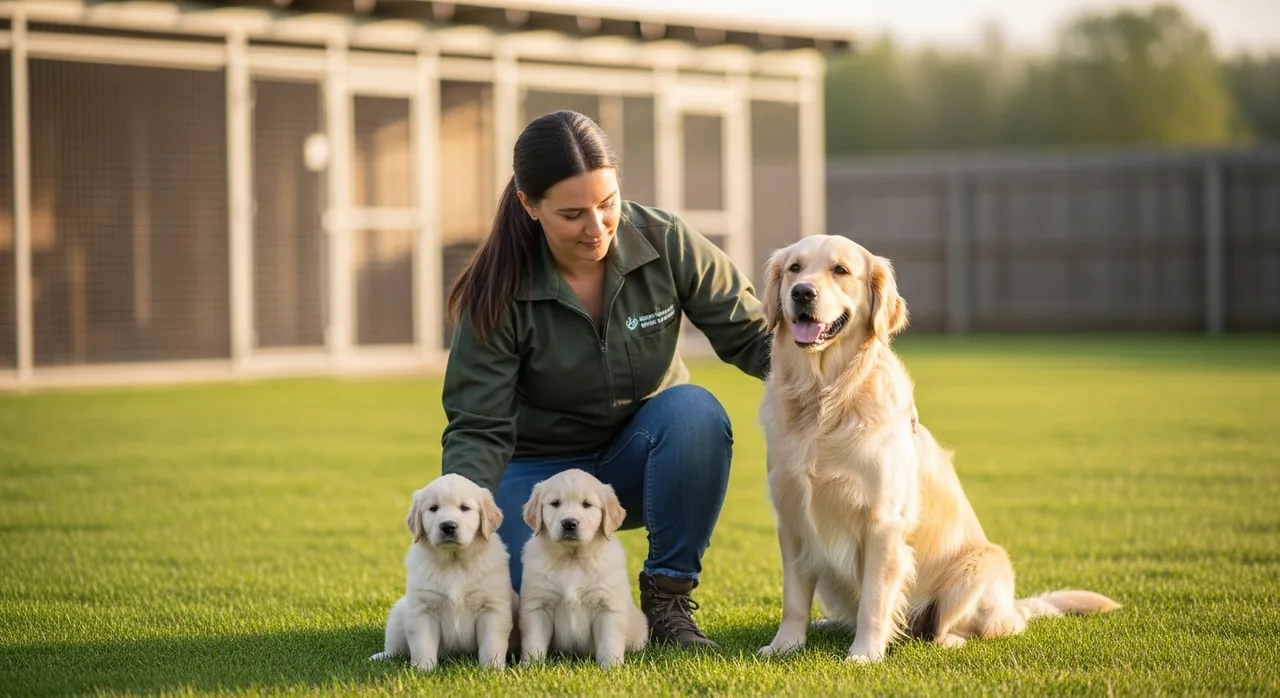
Choosing the breeder matters more than choosing the puppy. That's the part most buyers get backwards — they fall for a face in a photo, then work out whether the person behind it is any good. Do it in the other order. Every eight-week-old golden is adorable; what varies wildly is the fifteen years of health and temperament the breeder loaded into it before you ever showed up.
Where to Find Breeders Worth Interviewing
Build a shortlist from sources that filter for ethics rather than advertising budget. The GRCA's puppy referral program connects you with breeders who've signed the parent club's code of ethics; local golden retriever clubs run the same service regionally. Dog shows and hunt tests are the offline version — the people running goldens there know exactly who breeds well in your area. For the broader landscape of sources, good and bad, see where to buy a golden retriever.
The 12-Question Interview Script
Ask these in a phone call, not email — hesitations are data. A great breeder will enjoy this conversation; a bad one will try to end it.
- What health clearances do both parents have, and can I verify them?
- How many litters do you raise per year?
- How many breeds do you breed?
- Why did you choose this particular pairing?
- Where are the puppies raised, and how are they socialized?
- Can I meet the mother (and the father, if on site)?
- What happens if I can't keep the dog at any point in its life?
- What does your contract guarantee, and for how long?
- At what age do puppies go home?
- How do you match puppies to homes?
- What questions do you have for me?
- Can you give me references from two previous puppy buyers and your vet?
Question 11 is the sleeper. Ethical breeders interrogate buyers — about your schedule, your yard, your plans for training. A breeder with no questions for you sells to anyone, and that tells you how much they care where their dogs land.
Health Clearances Decoded
The answers to question 1 should name four specific screenings on both parents, all verifiable in the OFA's public database by the dog's registered name:
| Clearance | Acceptable result |
|---|---|
| Hips — OFA or PennHIP | Excellent, Good, or Fair (OFA) |
| Elbows — OFA | Normal |
| Eyes — ACVO ophthalmologist exam | Normal, within the last 12 months |
| Heart — board-certified cardiologist | Normal (basic vet listen isn't sufficient) |
You'll sometimes hear "CERF" for the eye exam — that's the older registry name; results now live with OFA. And note what's not on this list: "vet checked," "up-to-date on shots," and DNA breed tests. Those are table stakes or marketing, not clearances.

Red Flags That End the Conversation
Walk away, no second chances: no verifiable clearances; you can't meet the mother; puppies "always available" or multiple breeds on offer; releases before eight weeks; pushes payment by wire or gift card; won't provide references; or offers to meet you in a parking lot. Any one of these is disqualifying — several together is a mill or a scam, and our puppy scam breakdown shows exactly where that road ends.
How to Weigh the Answers
No breeder is perfect, so score the interview on pattern rather than perfection. The strongest positive signals: they raise one or two litters a year in the house, they can talk for ten unprompted minutes about why this sire suits this dam, they volunteer their dogs' failures ("we pulled her from the program when her elbows came back abnormal"), and they grill you back. Acceptable imperfections: a waitlist longer than you'd like, a dated website, no social media presence, or a preference for phone calls over email — none of these correlate with dog quality. What you're really listening for is whether the breeder's decisions are organized around the dogs' welfare or around moving inventory. Ten minutes of conversation makes that unmistakable; people can fake an answer, but they can't fake fluency.
If two breeders both pass, pick the one whose dogs' temperaments you liked best in person — you're choosing your dog's genetics and its first eight weeks of upbringing in a single decision.
Waitlists, Deposits, and Contracts
Expect a rhythm, not a transaction: an application, a phone interview, a waitlist of three to twelve months, then a deposit of $200–$500 once a litter is confirmed. The contract should include a multi-year hereditary health guarantee, spay/neuter or limited-registration terms for pet puppies, and a lifetime take-back clause. Puppy matching happens around week seven — good breeders assign puppies to homes based on temperament testing, which is why "can I pick mine from the photos?" gets a gentle no. The full deposit-to-pickup sequence is laid out in our guide to buying a golden retriever puppy safely.
What Ethical Breeding Costs (and Why)
Expect $2,000–$3,500 for a well-bred pet puppy in 2026. That price carries the clearances, the cardiologist visits, the prenatal care, and the weeks of socialization work — the breakdown is in our golden retriever price guide. If the number stings, the honest alternative isn't a cheaper breeder; it's a rescue. Breed rescues place vetted adult goldens for $300–$600 — start with our guide to where to adopt a golden retriever.
The Bottom Line
Interview the human before you fall for the dog. Twelve questions, four clearances, and one non-negotiable visit will sort every breeder in America into "yes" or "walk away" — and the good ones will respect you more for asking.